
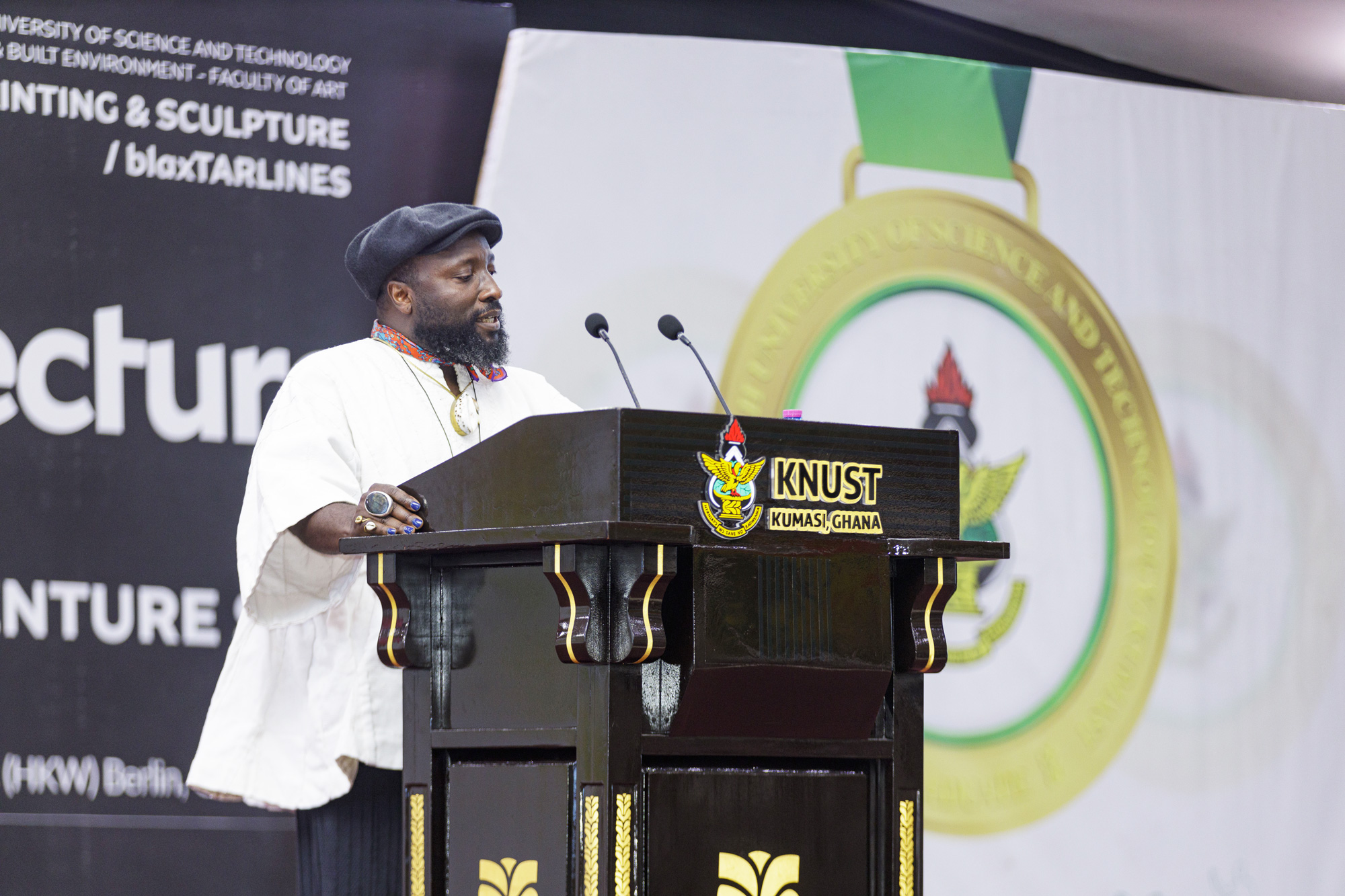
Prof. Dr. Bonaventure Soh Bejeng Ndikung has called for inclusion in institutions to include diverse voices and foster culturally inclusive narratives.
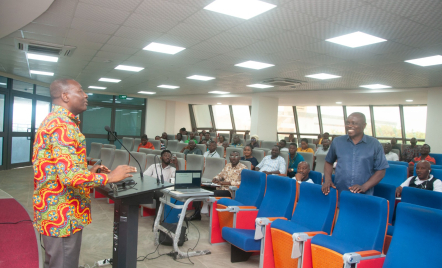
He made this call during a public lecture organized by the Department of Painting and Sculpture at the Kwame Nkrumah University of Science and Technology, in collaboration with blaxTARLINES KUMASI.
Professor Ndikung highlighted that many historical institutions were not designed to include diverse voices and experiences, limiting their ability to foster a truly inclusive cultural narrative.
“The crisis is that certain institutions were not made for us, and they may never be able to contain us,” he said.
He noted that this limitation requires the invention and reinvention of institutions to create space for addressing shared concerns through familiar forms of expression.
“With the idea of founding an institution as a fundamental part of curatorial practice, the goal was to create a space in which we can dare to talk about certain things that concern us using the tools that we have and using the languages that we excel, the languages that can actually carry our joys and our pains”, he said
He added that reshaping existing institutions over time can make them more inclusive.
“That is why I’m interested in that question of ‘institutioning’, even in existing institutions, so that at some point it becomes normal for you to see yourself in that institution, while a few years ago it wasn’t the case,” he mentioned.
Professor Ndikung further explained that his institution, Haus der Kulturen der Welt, has been reconstructed step by step using creative initiatives.
“So the metaphor I used in the past years is that we've had to dismantle the whole institution brick by brick, and rebuild it again. And part of that rebuilding of the institution has been through exhibitions of different kinds, performances of different kinds, you know, music. We also have a program on literature where we do different festivals,” he stated.
He also emphasized his interest in establishing institutions capable of embracing both emerging ideas and historical legacies.
“I’m very interested in the fact that we have the possibility of creating institutions of the future, institutions that can actually contain the new imaginaries we are working with and actually contain also our past that we are currently excavating,” he said.
He commended the blaxTARLINES KUMASI community for treating the institution as a dynamic practice, continually shaped through their ongoing engagement.
“And I think that is what the Blaxtarlines community have been doing here, thinking not of an institution as a noun but something that is a verb, something that is a practice, something that is being made as we walk along,” he said.
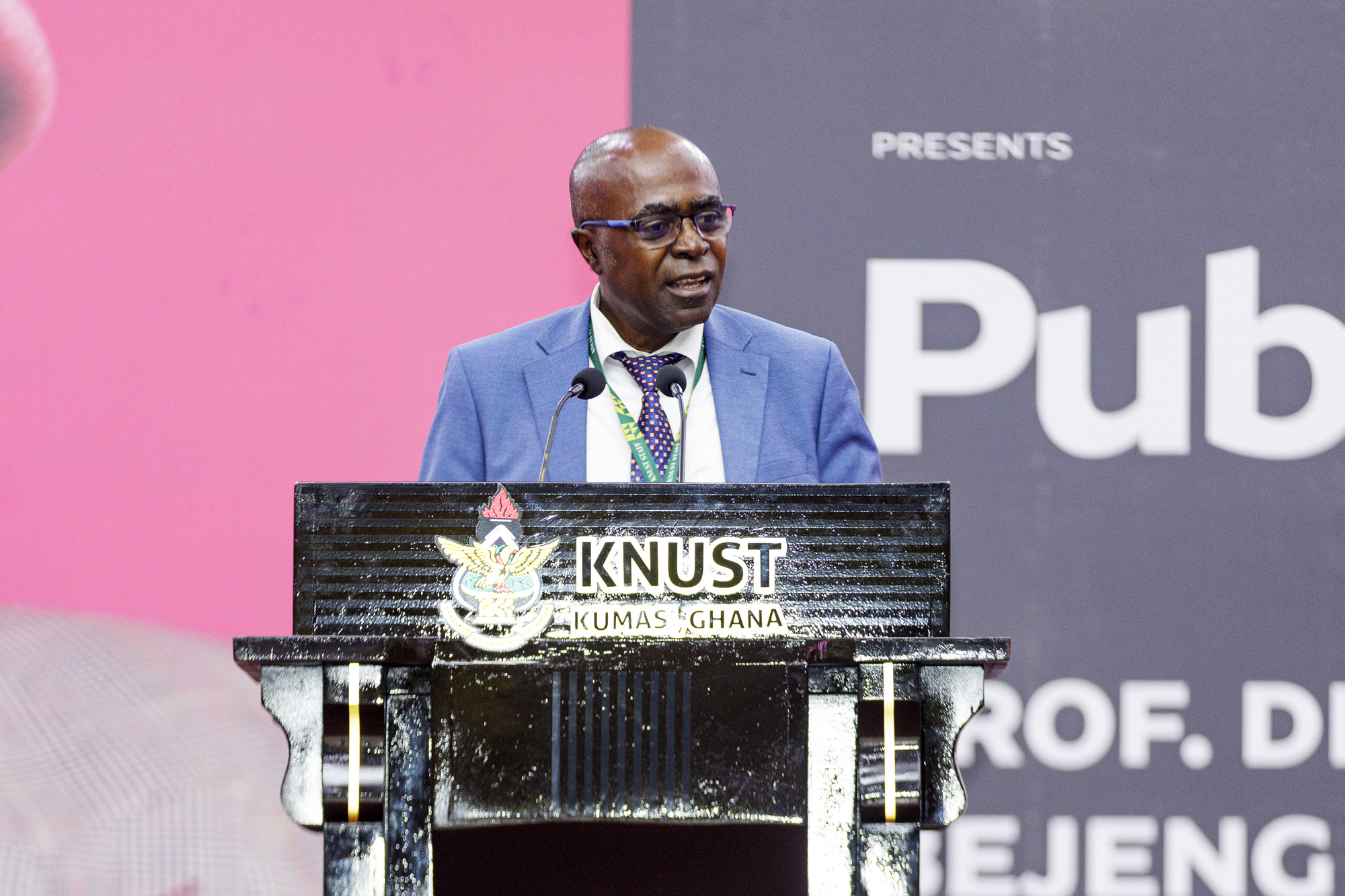
The Provost of the College of Art and Built Environment, Professor Christian Koranteng, noted that Professor Ndikung has played a key role in shaping global contemporary art discourse.
“Through his extensive work as a curator, writer and cultural thinker, Professor Ndikung has made remarkable contributions to the development of contemporary art discourse across continents,” he said.
He stated that the collaboration marked the start of a journey of mutual development.
“We believe that this engagement or collaboration marks the beginning of a deeper and fruitful journey ahead which will bring mutual enrichment and shared growth to us all,” he said.
The Provost praised the Department and Blaxtarlines for hosting the lecture and strengthening the college’s reputation.
“I would like to commend the Department of Painting and Sculpture and the Blaxtarlines platform for organizing this important lecture and for their continued efforts to position our college and the university as a vibrant center for artistic scholarship and critical creative practice,” he said.