
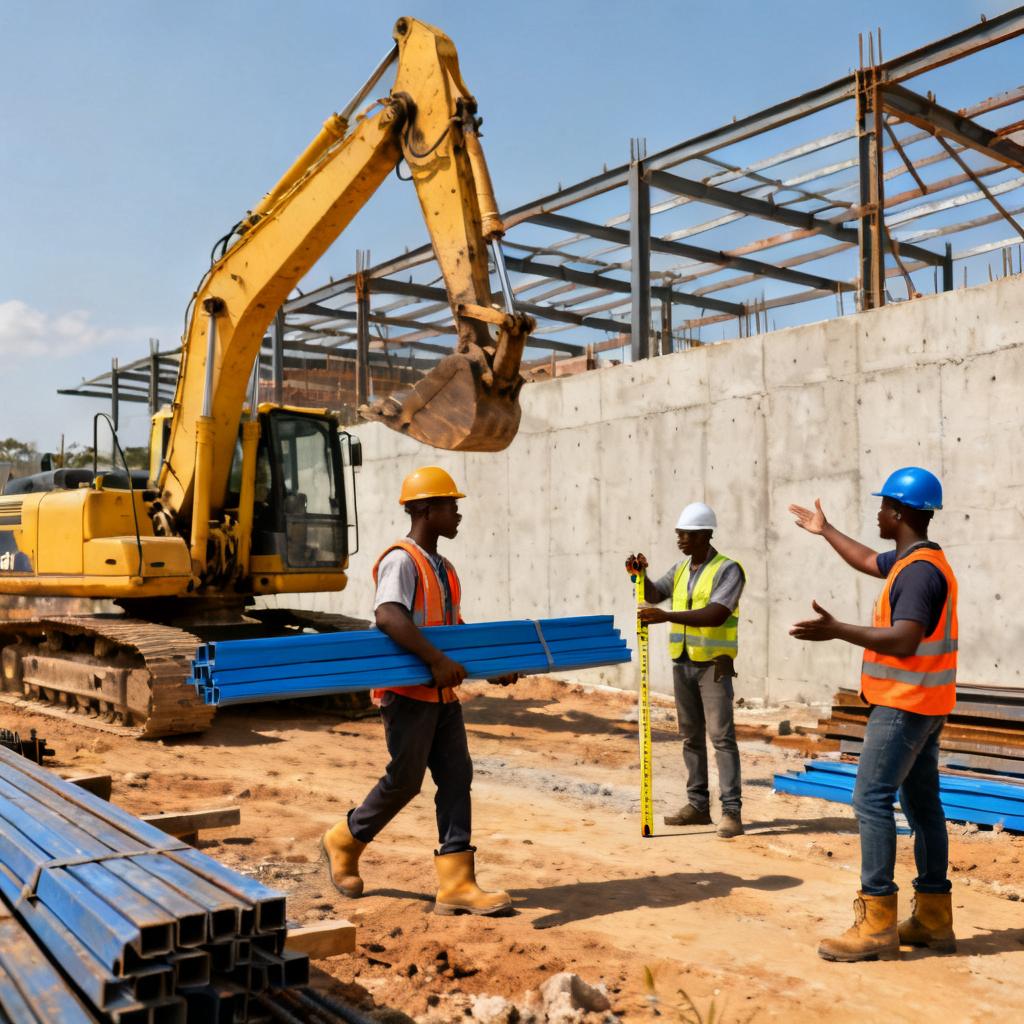
On construction sites, decisions about safety are often guided by more than just training and rules. Researchers at the College of Art and Built Environment, KNUST, have found that local cultural beliefs significantly influence how construction workers perceive safety risks and their willingness to take risks on site.
Published on ScienceDirect, the study examined how cultural values shape safety behaviour in Ghana’s construction industry.
The research team, led by Dr. Frederick Owusu Danso, drew on an extensive literature review and survey data collected from 96 construction workers across multiple sites in Ghana.
The findings revealed that workers’ personal attitudes toward safety play a significant role in shaping risk-taking behaviour. More importantly, the study identified four key cultural factors that mediate this relationship: belief in divine protection, respect for elders, the influence of family opinions, and faith in overcoming risks.
The study highlighted how these cultural dynamics help explain why construction workers in developing contexts may engage in risky behaviours, even when they are aware of potential dangers.
The researchers emphasized the need for culturally informed safety policies and training programmes that go beyond purely technical measures. They recommended involving religious institutions and community leaders in promoting safer practices on construction sites.
By recognizing the role of culture in shaping behaviour, the study suggests that Ghana can develop more effective, context-specific strategies to improve safety in the construction industry.
The co-authors are Professor Emmanuel Adinyira, Professor Patrick Manu, Professor Kofi Agyekum, Professor Divine Kwaku Ahadzie, and Professor Edward Badu.