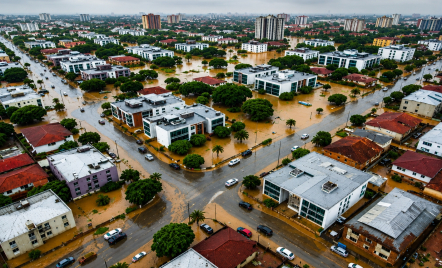


A study co-authored by Professor Divine Kwaku Ahadzie of the College of Art and Built Environment (CABE), KNUST is calling for improved housing insurance systems, targeted financial support for flood victims, and stronger building standards to reduce the burden of post-flood recovery in Ghana.
The research, titled Impact of Floods, Recovery and Repairs of Residential Structures in Ghana: Insights from Homeowners, argues that while flood management in Ghana often focuses on emergency response, far less attention is paid to the difficult and costly process of rebuilding lives after the waters recede.
Published in GeoJournal (2022), the study highlights the urgent need for policies that support affected households beyond the disaster itself.
Professor Ahadzie explained that the research was motivated by a desire to understand how communities recover after devastating flood events and what that reveals about their resilience.
"I was inspired by understanding how quickly people affected by flooding return to some sort of normalcy, which marks a measure of flood resilience. This is important as communities are moving towards building resilience amid climate change," he said.
Among its recommendations, the paper stresses the importance of expanding access to affordable housing insurance, providing structured financial relief for flood-affected families, enforcing resilient building standards, and investing in urban infrastructure that reduces flood vulnerability.
According to the researchers, these interventions are critical to breaking the cycle of repeated loss and reconstruction that many households face.
The study found that flood events often leave behind significant structural damage to homes, including weakened foundations, damaged walls, compromised flooring, and destroyed electrical systems.For many households, repairing this damage comes at a heavy financial cost.
Without insurance coverage or formal recovery systems, families are often forced to depend on personal savings, loans, or support from relatives to rebuild.
Professor Ahadzie noted that many homeowners underestimate the extent of flood damage when constructing their homes, leaving them more vulnerable when disasters occur.
"From the findings, it was established that communities underestimate the great damage floods can cause to buildings, as they rarely factor flood-resilient strategies into construction from the outset. The financial and social shocks that follow can be overwhelming and significantly affect their recovery process," he said
The research notes that this pattern can deepen economic hardship, particularly for low-income households already living in vulnerable conditions.
The findings come at a time when recent flooding in Accra has once again displaced residents and damaged homes, renewing concerns about how Ghana manages not only flood prevention, but also recovery.
While public attention often centres on the immediate destruction caused by floods, the study shifts focus to the long-term realities faced by survivors.
Recovery, the paper shows, can take weeks or even months, disrupting livelihoods, education, and access to safe living conditions. In some cases, affected families are forced into temporary shelter arrangements while struggling to finance repairs.
Beyond physical damage, the study also points to the emotional toll of repeated flooding, noting that the uncertainty of future disasters can create lasting stress and anxiety for residents.
Professor Ahadzie mentioned that governments and communities must adopt more proactive approaches that strengthen resilience before disasters occur.
"One practical step the government can take is to encourage flood-resilient construction practices and support some form of community insurance system where residents pool funds together through social capital to protect themselves against such localised risks," he said.
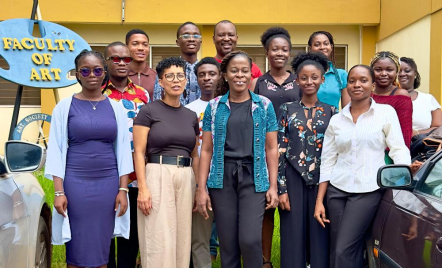
The co-authors of the study include Dr. Henry Mensah and Dr. Eric Simpeh.