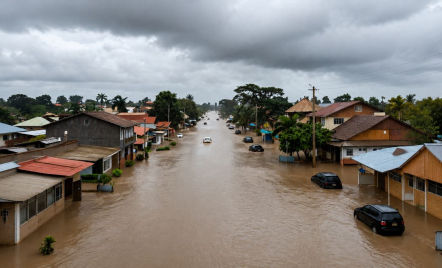

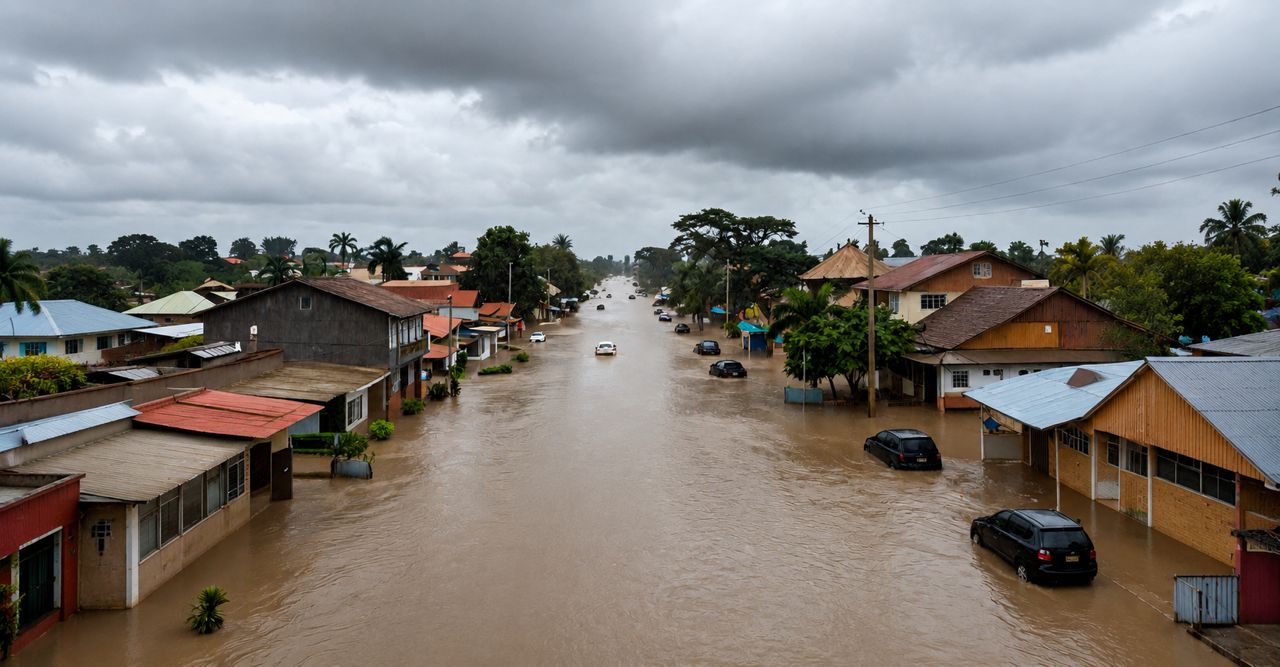
Protecting wetlands, strengthening land use planning regulations, and improving institutional coordination could be the key to reducing Accra’s recurring flood disasters, according to research involving scholars from the College of Art and Built Environment, KNUST.
Published in SN Social Sciences in 2022, the paper titled The Dilemma of Flood Occurrence in Accra: Climate Change or Poor Land Use Planning and Practices? examines the long-standing debate over whether Accra’s perennial flooding is driven primarily by climate change or by human planning failures.
For years, climate change has often been cited as the dominant explanation for flooding across many African cities. However, the researchers argue that while climate change may intensify rainfall events, the situation in Accra is largely shaped by human decisions.
Using a case study approach, the researchers drew on both primary and secondary data, including interviews with state agencies, surveys involving 100 households, and an extensive review of literature on flooding and urban development.
Their findings revealed varying public perceptions on the causes of flooding. While some respondents pointed to climate change, most households and all agency officials identified weak land use planning enforcement as a major contributor.
According to the study, rapid population growth and urban expansion have pushed development into wetlands and flood-prone zones, disrupting the city’s natural drainage systems and increasing flood vulnerability.
Building on the paper’s conclusions, lead author Mr. Jedidiah Nusinyo Amaglo points to green urban infrastructure as a critical strategy for restoring some of the ecological systems lost to unplanned urbanisation.
“Green urban infrastructure directly counters the disruption of the natural flow of water by reintroducing nature’s own hydraulic logic into the built environment,” he said. “Restored wetlands, urban green corridors, permeable pavements, and bioswales essentially perform the drainage functions that were lost when natural landscapes were built over.”
He noted that conventional drainage systems alone may no longer be enough to tackle Accra’s flood challenges.
“Rather than fighting water with concrete drainage, green infrastructure works with water’s natural movement, reducing peak flood volumes and slowing surface runoff,” he added.
The researchers therefore recommend that city authorities prioritise the protection of wetlands and environmentally sensitive areas while strengthening the enforcement of planning regulations to prevent unauthorised developments in flood-prone zones.
Mr. Amaglo further stressed that green infrastructure presents a practical pathway for flood management, especially in urban areas where encroachment has already occurred.
“Protection alone is insufficient,” he explained. “Restoration and retrofitting are necessary because much of the natural ecological capacity has already been lost.”
He added that interventions such as green roofs, urban forests, rain gardens, and constructed wetlands could help restore some of the city’s lost flood-control capacity while improving environmental quality.
Beyond flood prevention, the study points to broader benefits of green urban infrastructure. Mr. Amaglo observed that these systems can simultaneously reduce urban heat, improve air quality, enhance biodiversity, and create recreational spaces for residents.
“This multi-functionality makes a stronger case for investment,” he noted, highlighting the potential for such interventions to support broader urban sustainability goals.
Still, the researchers caution that ecological solutions alone cannot replace institutional reform.
Reflecting on this, Mr. Amaglo emphasised that green infrastructure must work alongside stronger governance systems.
“It would be most effective as a complementary strategy for salvaging ecological capacity while governance systems are strengthened,” he said, stressing the need for political commitment, better waste management, and stronger coordination across agencies.
The co-authors include Dr. Stephen Appiah Takyi, Dr. Michael Osei Asibey, Prof. Owusu Amponsah, and Dr. Henry Mensah.