
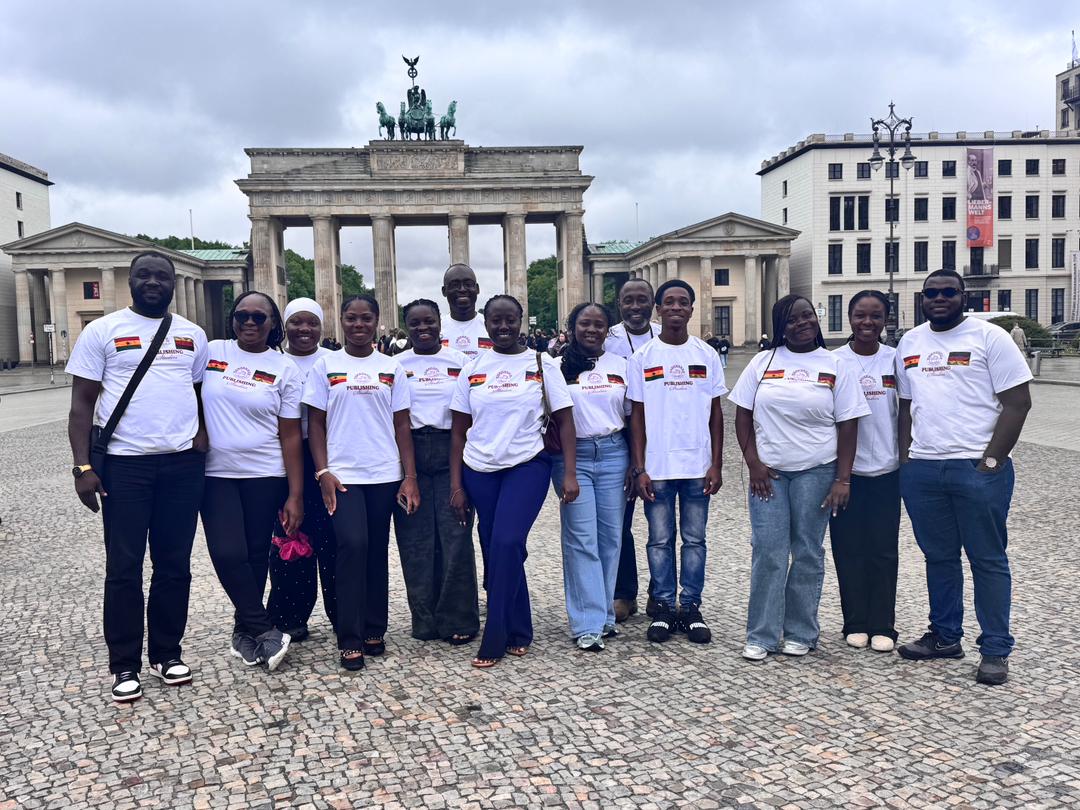
A delegation of university staff, Alumni, and students from the Department of Publishing Studies at the Kwame Nkrumah University of Science and Technology, led by the Head of the Department, Dr. Francis K.N. Nunoo, and Dr Ralph Nyadu-Addo, has participated in an exchange programme (academic, cultural, and industrial tour) in Germany from 23rd April to 7th May 2026.
The trip provided the delegation with valuable international exposure and practical insights into modern publishing, printing technologies, academic systems, and cultural heritage.
During their stay in Germany, the delegation visited several renowned printing and media companies, including SPS Technology Print, Druckpartner GmbH, and WKS Gruppe. The programmes in North Rhine-Westphalia were coordinated by Mr. Victor Acquah Djan, an alumnus of KNUST who is the Deputy CEO of Duckpartner in Mülheim, Germany. These visits exposed them to advanced industrial printing technologies, automated production systems, colour management techniques, digital printing workflows, and modern publishing operations.
At WKS Gruppe, the group had the opportunity to observe historic letterpress machines, which provided practical insight into the evolution of printing technology from traditional methods to modern automated systems.
At SPS Techno Screen, students interacted with the International Sales Manager who shared perspectives on innovation within the printing industry and discussed possible future collaborations and expansion opportunities in Africa.
The group also visited the University of Wuppertal, where they explored modern 3D printing technology and participated in a practical session by designing and printing personalised key holders. The activity introduced students to digital manufacturing technologies and demonstrated the growing relevance of 3D printing in creative and industrial fields.
Another major highlight of the tour was a visit to the Krombacher Brewery, where the team learned about large-scale industrial production, quality control systems, packaging, and manufacturing processes within Germany’s beverage industry.
On 3rd May 2026, the group travelled from Mülheim an der Ruhr to Leipzig to begin the second phase of the programme. In Leipzig, students participated in a workshop organised by the SEPT Competence Centre at Leipzig University. The discussions focused on entrepreneurship, innovation, and international academic collaboration.
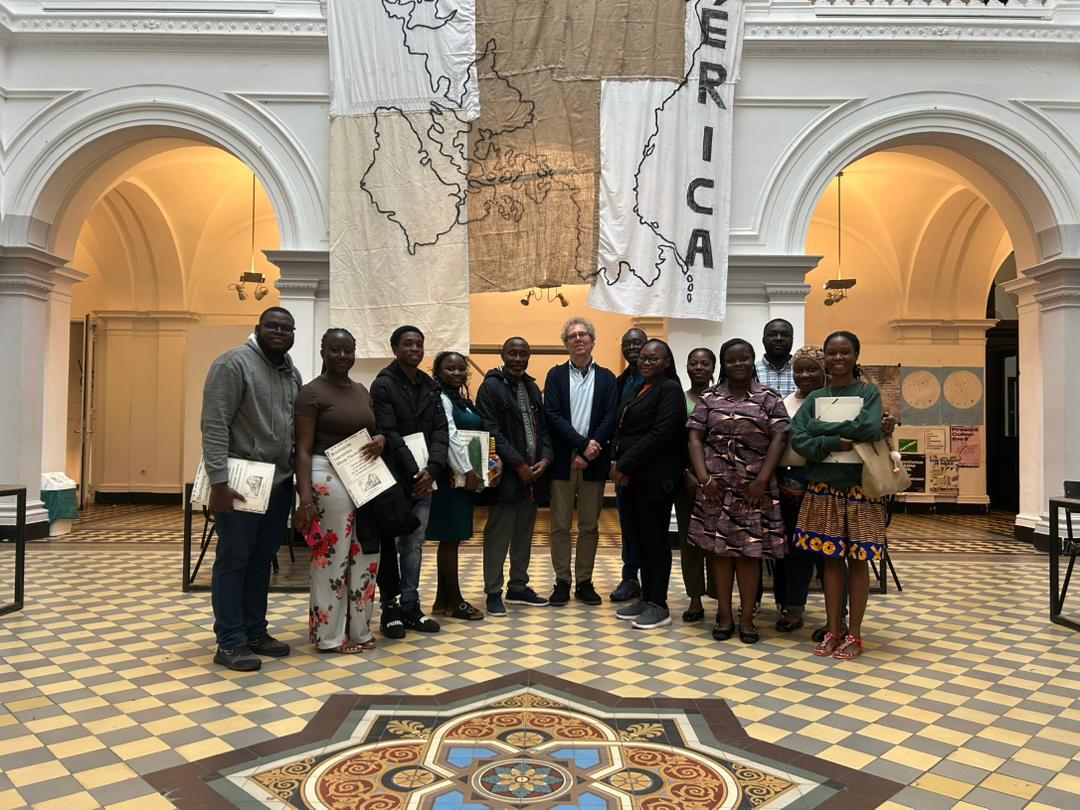
The group also had the privilege of meeting the Rector (President) of the University, Prof. Dr. Eva Inés Obergfell, who spoke about the Memorandum of Understanding (MoU) between Leipzig University and Kwame Nkrumah University of Science and Technology and emphasised the importance of strengthening international academic partnerships.
The President of the Technical University of Braunschweig hosted Dr. Ralph Nyadu-Addo to discuss possible areas of collaboration in education, automotive and aerospace engineering, climate science, pharmacy and the built environment.
The Ghanaian delegation later visited the Hochschule für Grafik und Buchkunst (Academy of Fine Arts Leipzig). As part of the activities at the Academy, they toured their design section, where they were introduced to various forms of typography and font designs.
During the session, they learned about different font styles, type classifications, and the role typography plays in communication, branding, graphic design, and publishing. This experience provided practical insights into the creative and technical aspects of type design and its importance in the publishing industry.
As part of the cultural and educational activities, students visited the Ghanaian Embassy in Berlin and gained insight into diplomatic relations, consular services, and Ghana’s international cooperation efforts. The group also visited notable landmarks in Berlin, including the Parliament and Brandenburg Gate, where they learned about Germany’s governance systems, political history, and cultural heritage.
The programme successfully combined academic learning, industrial exposure, and cultural exploration, providing students with a broader understanding of global publishing and printing practices.
The experience also strengthened international collaboration and exposed staff, students, and alumni to innovative technologies that are shaping the future of publishing and print media production.