
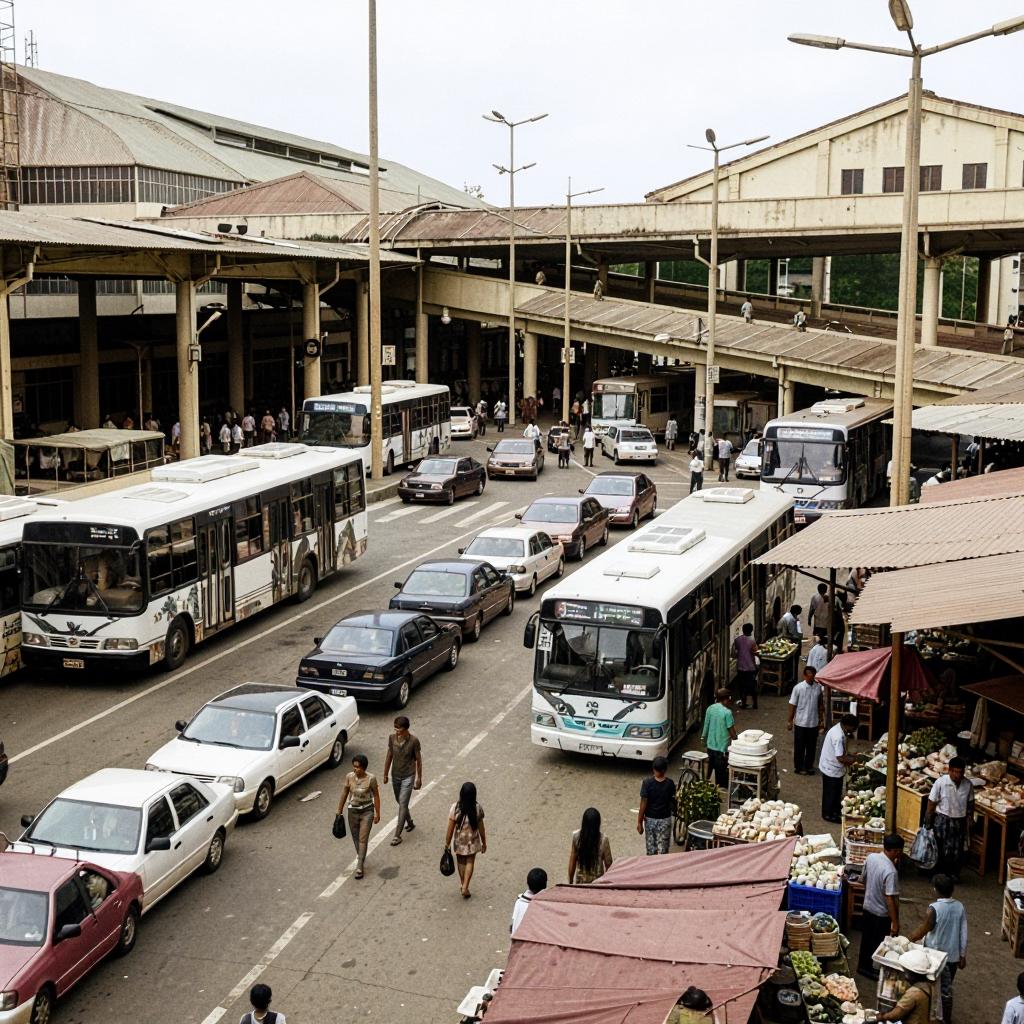
From walking and cycling to driving and public transport, the way people move around Kumasi could shape the city’s sustainability future. Researchers from the College of Art and Built Environment (CABE) are exploring the factors influencing that shift.
In a study led by Dr. Veronica Sakyi-Adjei, the researchers investigated the challenges and opportunities associated with adopting environmentally friendly transport options such as walking, cycling and public transportation.
Published in Taylor & Francis’ Sustainable and Resilient Infrastructure, the study examined why eco mobility adoption remains limited in Kumasi despite growing concerns about congestion, pollution and sustainable urban development.
The research was inspired by Dr. Sakyi-Adjei’s observations of sustainable transportation systems during a visit to Germany, where walking, cycling and public transportation were seamlessly integrated into everyday urban life despite growing populations and vibrant economic activity.
That experience prompted her to reflect on whether Kumasi’s urban structure and planning framework were conducive to eco-mobility adoption.
“I became interested in whether our urban form, spatial structure and physical planning systems are conducive to eco-mobility adoption,” she explained. “As someone whose research focus is on urban morphology, I was particularly interested in exploring how the design and structure of cities influence people’s mobility choices and sustainability outcomes.”
The study identified inadequate transport infrastructure, safety concerns, unreliable public transport services and limited policy support as some of the major obstacles affecting the adoption of eco-friendly mobility systems in Kumasi.
Social attitudes and broader urban planning challenges were also found to influence transport choices.
According to the researchers, cultural perceptions play a significant role in shaping how residents travel, often discouraging the use of sustainable transport options.
Dr. Sakyi-Adjei noted that private vehicle ownership is frequently associated with social status, comfort and success, while walking, cycling and public transport are often viewed less favourably.
“In our context, walking, cycling, or the use of public transport are often viewed as less desirable or as alternatives only for those who do not own private vehicles,” she said.
She added that safety concerns, limited pedestrian and cycling infrastructure and negative public attitudes towards non-motorised transportation further reinforce these perceptions and influence everyday travel behaviour.
Despite these challenges, the researchers identified several opportunities for encouraging sustainable mobility, including stronger policy interventions, investments in pedestrian and cycling infrastructure, improved public transportation systems and greater public awareness of sustainability-related issues.
Dr. Sakyi-Adjei emphasized that creating more sustainable transport systems would require practical measures that place people at the centre of planning and decision-making.
“One key takeaway is that eco-mobility cannot be achieved through policy discussions alone; it requires practical, inclusive and people-centred interventions,” she said.
She urged policymakers to prioritise investments in safe pedestrian walkways, cycling infrastructure and reliable public transport systems while integrating sustainability into broader urban planning strategies.
According to the researchers, addressing local mobility challenges through practical and inclusive transport policies will be essential for promoting environmentally sustainable transportation systems and improving urban mobility in Ghana.
Looking ahead, Dr. Sakyi-Adjei warned that failure to address current mobility challenges could have significant consequences for Kumasi’s future development.
“If these challenges remain unaddressed, Kumasi could experience worsening traffic congestion, increased environmental pollution, rising road accidents, heightened safety concerns, reduced accessibility and growing pressure on urban infrastructure,” she cautioned.
However, she believes the city still has an opportunity to chart a different course.
“With proactive planning and investment in sustainable transportation systems, Kumasi has the potential to become a more resilient, accessible, inclusive and environmentally sustainable city for future generations,” she said.
The co-authors of the study are Prof. Victor Kwesi Quagraine, Prof. Alexander Boakye Marful, Dr. Ayisha Ida Baffoe-Ashun and Mr. Ernest Biney.