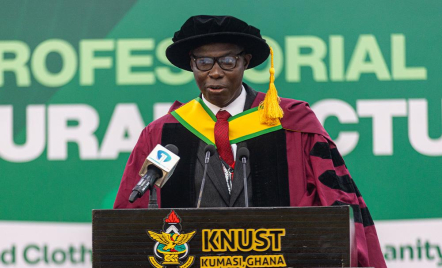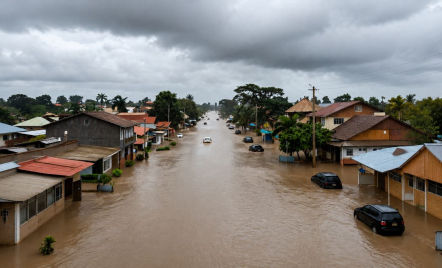

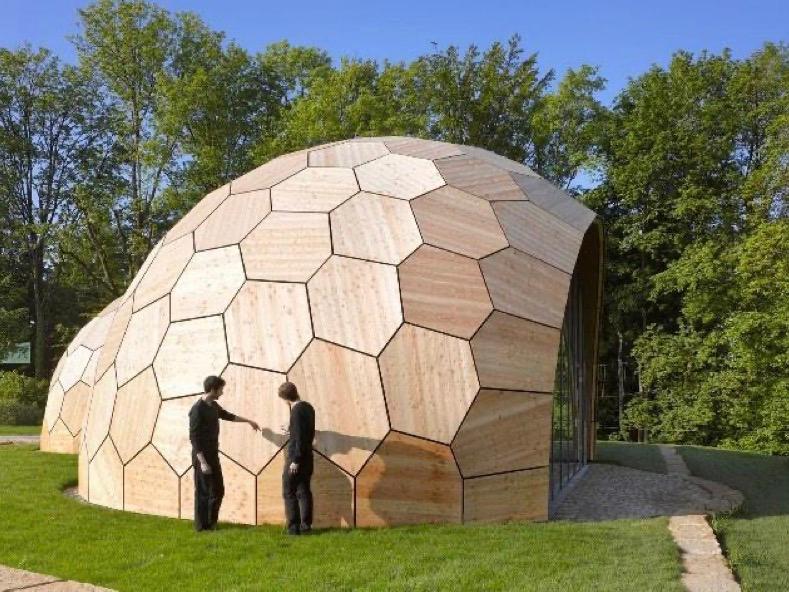
As Ghana grapples with climate pressures and rapid urbanisation, a team of researchers from the College of Art and Built Environment CABE at KNUST has turned to an unlikely source for solutions, nature itself.
The study reveals that mimicking nature’s design principles, an approach known as biomimicry, can significantly strengthen urban resilience, especially when architects and engineers work closely together.
Published in the Advanced International Journal for Research (2025), the research explores how nature inspired strategies can address pressing challenges such as climate adaptation, water conservation, and material efficiency in Ghana’s built environment.
Led by Mr. Michael M. Baccah in collaboration with Professor Alexander B. Marful and a multidisciplinary team, the study draws on literature reviews, case studies, and expert insights to propose a practical path forward.
Mr. Baccah explained that the work builds on his earlier academic journey, where he was first introduced to biomimicry under the guidance of his supervisor.
“This research builds on my master’s thesis, which explored how biomimicry can be applied in architectural design. This work was carried out under the guidance of Professor Alexander B. Marful, who introduced me to biomimicry in architecture and supervised my thesis,” he said.
He noted that while interest in biomimicry is growing among designers, its success depends heavily on interdisciplinary collaboration.
“Architects are increasingly able to develop biomimetic design ideas, but bringing those ideas to life depends heavily on working with engineers and other professionals who can translate them into practical construction solutions,” he said.
He further explained that without this collaboration, many promising ideas fail to move beyond theory, limiting their impact on real world challenges.
“Without this shared understanding and collaboration, many of these ideas remain unrealised, reducing biomimicry’s potential to address real challenges like climate adaptation and urban resilience,” he said.
To address this gap, Mr. Baccah noted that the team developed a structured framework to guide professionals from concept to implementation.
“The goal is to guide the entire process, from identifying a problem, to learning from nature, to testing and applying solutions in real projects,” he said.
The resulting model, the Biomimicry Integrated Urban Resilience Model BIURM, emphasises collaboration across disciplines, enabling the integration of solutions such as passive cooling, water efficient systems, and self repairing materials into urban design.
Ultimately, the study calls for stronger policy support, targeted training, and increased investment in research to scale these innovations.
With nature as both mentor and model, the researchers argue that Ghana has a unique opportunity to build cities that are not only functional but also adaptive and resilient.
The co-authors include Mr. Henry Kofi Dansu, Mr. Eric Asirifi, and Mr. Nana Kwame B. Marfo Yiadom.